
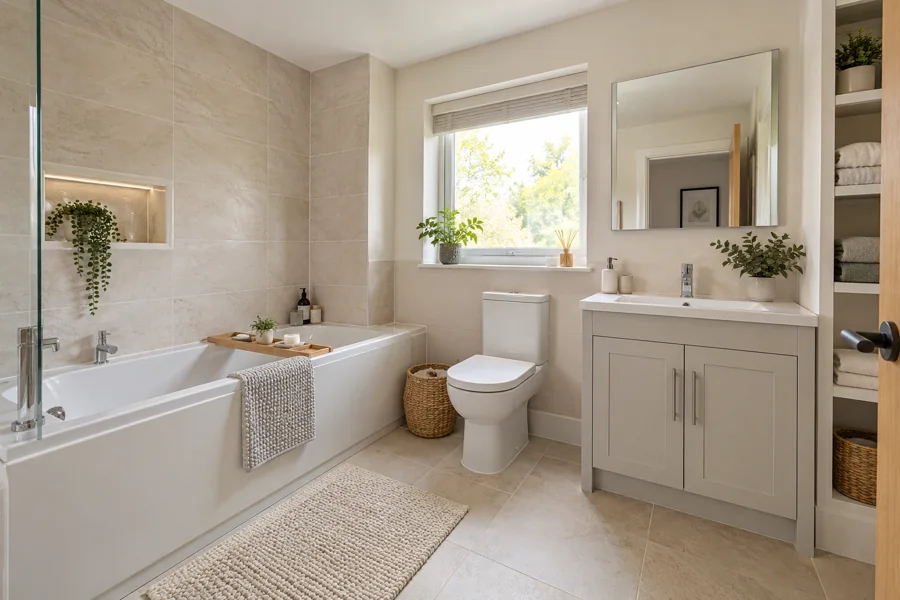
Agree the household priorities
A shared bathroom refit starts with a conversation about use. One person may want a bath, another a larger shower, while everyone needs somewhere for toiletries. List the needs before selecting products and decide which are essential. If a bath is being removed, make that an explicit decision rather than a side effect of choosing a photograph. Explain the priorities to us and we can help plan a workable arrangement. You do not need everyone to agree on every colour before enquiring, but the main bathing choice should not remain hidden until fitting is about to begin.
It can help to have one short list shared by the people making the choices. Put the bathing decision first, then storage, layout problems and the preferred look. Where preferences conflict, talk about the daily action each choice improves. That is easier to resolve than two photographs labelled favourite. Bring the remaining questions to us instead of assuming the household must finish the design without help.
Test the proposed room through a normal morning
Picture the order of use: entering, reaching a towel, washing at the basin and stepping into the shower. Notice whether a cupboard or screen would block those actions. This is a useful way to judge a layout that looks spacious when every door is closed. Our bathroom design service checks the products as a whole room. Tell us about anyone who finds the current room difficult to use so the practical requirements can be discussed, without assuming a standard layout automatically suits everybody.
Bring products and work into one agreed list
The chosen suite, storage and finishes should be understood before removal starts. Keep the agreed product details so alternatives can be compared properly if something changes. Check any items you plan to supply yourself and explain that arrangement before the quote is finalised. Small missing components can matter as much as the main fitting when it is time for installation. Our cost and inclusions guide explains how that specification connects to the total. The aim is a complete plan rather than a collection of deliveries selected independently.
Clear space for materials and fitting
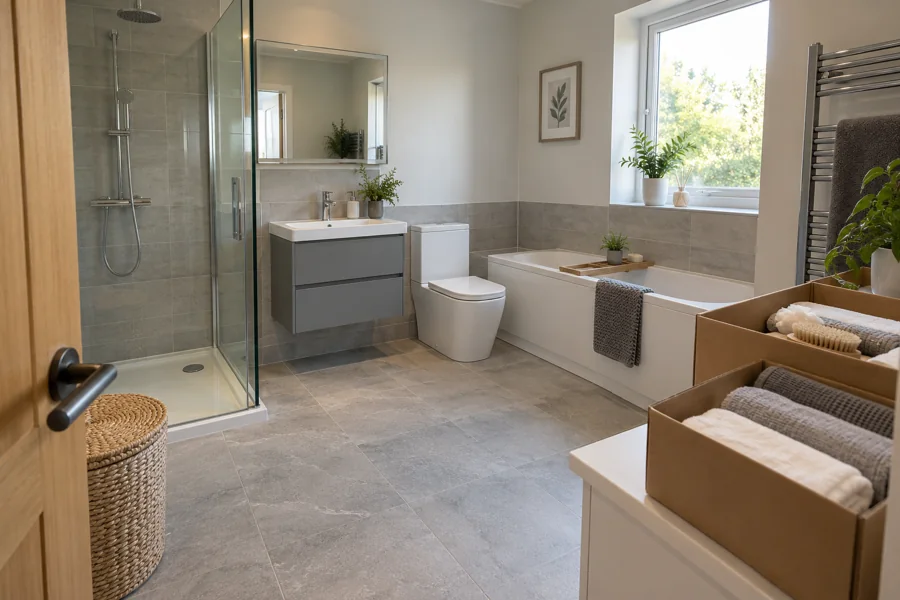
Move daily toiletries and personal items before the agreed start, and ask which nearby spaces need to remain accessible. Keep cleaning products and medicines in a safe temporary place. Do not block the carrying route with boxes from the bathroom, and do not begin removing fittings yourself unless that work has been specifically agreed. Discuss protection for the route and where products can be stored. Good preparation is about following the practical arrangements for the job, not making guesses about what will help and finding that a useful access point has been covered.
Make a plan for washing and toilet use
Ask which facilities are likely to be unavailable at each stage of the proposed work. If the room contains the only toilet, make sure that is understood before any fitting dates are agreed. Do not assume the whole bathroom can be put back into use at the end of each working day. The answer depends on the removal, connections and materials involved. Think about children's routines, pets and anyone who needs predictable access. Arrange alternatives where needed before work begins. Agree the household arrangements around the proposed work and the facilities you will need.
Decide how questions will be answered
During a refit, an unexpected repair or product issue may need a clear answer. Agree how you can be contacted and keep that route available. Ask for the actual issue and proposed change to be explained, including its effect on the work, cost and timing. If you want to add something, distinguish that new choice from a correction to the original specification. Keep a record of decisions rather than relying on memory. This helps avoid different household members giving conflicting instructions about the same fitting or finish during a busy day.
Prepare for normal use after fitting
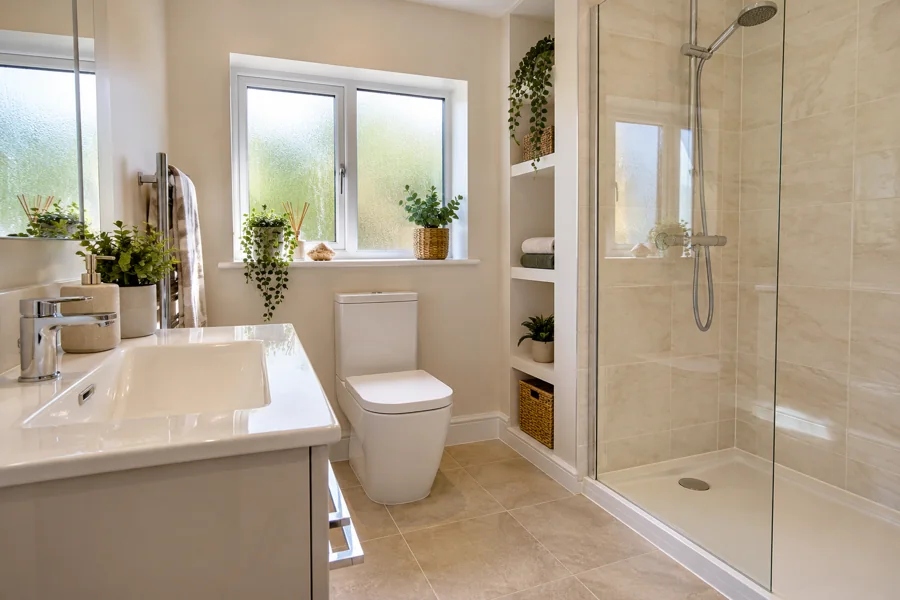
New surfaces and sealants may need time before water exposure or cleaning. Ask about the selected materials, follow the care instructions and keep the product details. Put toiletries back only when the room is ready, and use the storage as planned rather than balancing heavy items on an unsuitable ledge. Learn the controls and ask about any maintenance access you need to leave clear. If something is not understood, raise it during the completion discussion. This stage is about using and caring for the room, rather than simply deciding that it looks finished.
Show other users the practical instructions too. The person present at completion may not be the only person operating the shower or cleaning the new finishes. Keep the information where the household can find it, and explain any relevant waiting time before normal use. This makes the handover useful beyond the first conversation. It also helps stop an old cleaning habit being applied to a new surface without checking whether the product instructions allow it.
Discuss the work with the people fitting it
We design, supply and install your bathroom, so the household arrangements can be discussed with the room and fitting work. Read our installation service page for the practical scope, then call now or send your enquiry. Include your Falkirk postcode, the main change you want and whether it is the only bathroom. The form begins a discussion; it does not reserve a fitting date or confirm a price. We can then work through the proposed layout, appointment and quote without asking you to complete every product choice alone.